MOBILE MOTORCYCLE DETAILING IN LOS ANGELES
How to Care for Motorcycle Chrome and Exposed Metal
Learn how to clean, polish, and protect chrome and metal parts without scratching the surface or damaging protective coatings.
Browse Motorcycle Care Guides
How to Care for Motorcycle Chrome and Exposed Metal
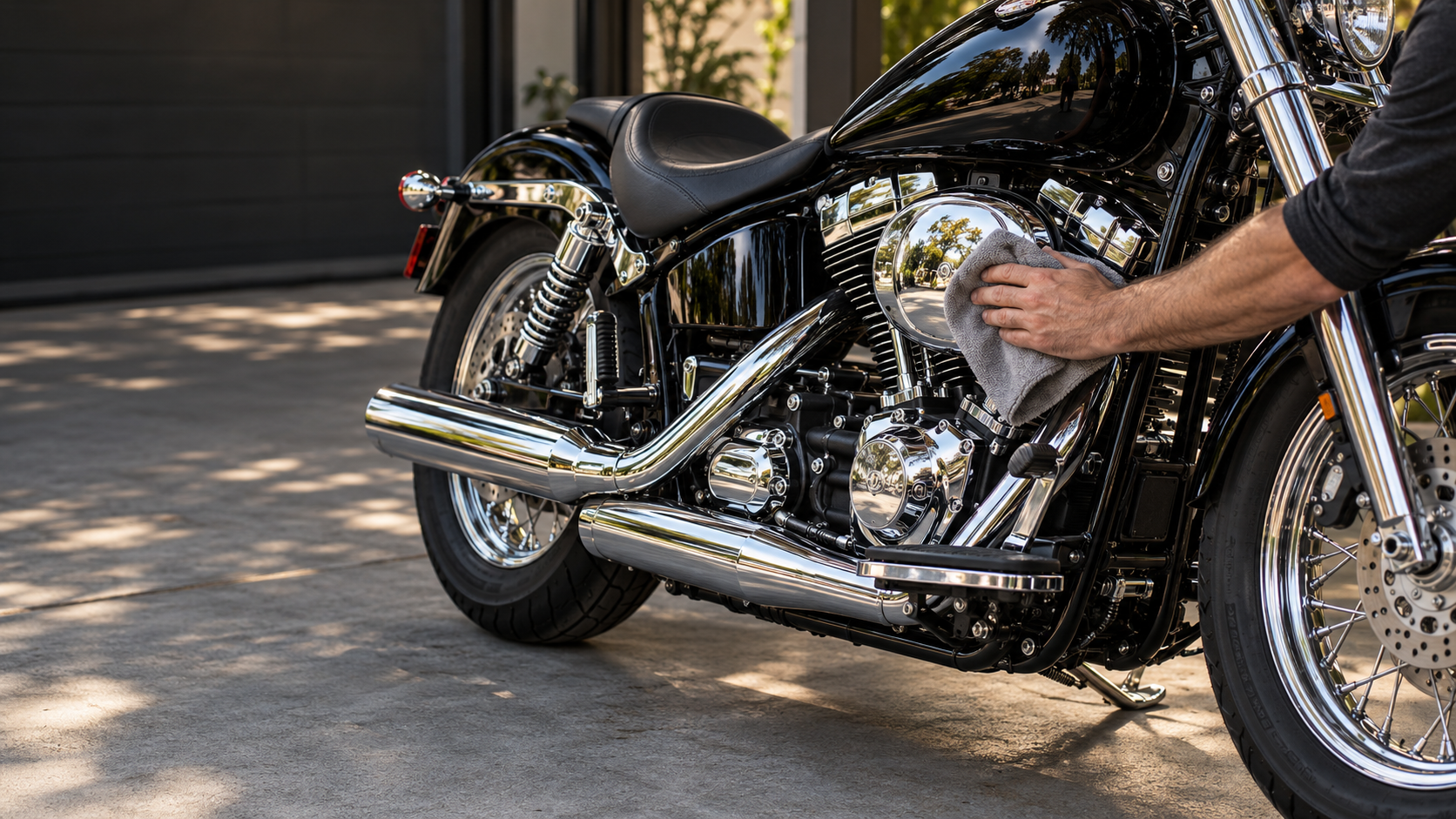
Proper motorcycle chrome care starts with identifying each surface before you clean or polish it. Chrome, stainless steel, polished aluminum, anodized aluminum, and coated metal may look similar, but they don’t always respond to the same products.
Using the wrong cleaner or metal polish can dull a finish, remove a protective coating, or leave scratches. Follow these steps to clean and protect your motorcycle’s chrome and exposed metal safely.
Why Motorcycle Chrome and Metal Need Regular Care
Chrome and exposed metal face constant contact with:
- Road grime
- Brake dust
- Water spots
- Bug residue
- Coastal moisture
- Road salt
- Fuel and oil residue
- Heat from the engine and exhaust
Brake dust and dirt can hold moisture against wheels and other metal parts, which may contribute to corrosion. Harley-Davidson recommends removing accumulated brake dust and sediment from wheels and applying suitable protection after cleaning.
Identify the Surface Before Cleaning
Don’t assume every shiny part is chrome. Your motorcycle may include several types of metal and protective finishes.
Chrome
Chrome has a bright, mirror-like appearance. It usually appears on exhaust components, engine covers, handlebars, mirrors, wheels, and trim.
Use a non-abrasive cleaner labeled for chrome.
Polished Aluminum
Polished aluminum can look similar to chrome but often has a softer reflection. Uncoated aluminum may oxidize and develop a cloudy or chalky appearance.
Use a polish approved for bare or polished aluminum.
Coated or Anodized Aluminum
These surfaces have a protective finish. Abrasive metal polish can remove or damage that coating.
Harley-Davidson warns against using bare-metal polish on coated aluminum wheels because it can remove the protective layer.
Stainless Steel
Stainless steel is common on exhaust systems, fasteners, and trim. Use a cleaner or polish approved for stainless steel, following the product directions.
Painted or Powder-Coated Metal
Treat painted and powder-coated parts like painted surfaces. Don’t use chrome or bare-metal polish unless the motorcycle manufacturer approves it.
If you cannot identify a finish, check the owner’s manual or contact the manufacturer before applying a polishing product.
What You’ll Need
Gather your supplies before starting:
- Motorcycle-safe wash soap
- Clean water
- Soft wash mitt
- Soft detailing brushes
- Microfiber towels
- Non-abrasive chrome cleaner
- Surface-specific metal polish, if needed
- Approved protectant or sealant
- Separate wheel-cleaning towels and brushes
Never use the same towel on painted surfaces after using it on dirty wheels or exhaust parts. Small particles trapped in the towel can scratch the finish.
Step 1: Let the Motorcycle Cool
Park the motorcycle in the shade and allow the engine, exhaust, and metal surfaces to cool completely.
Water and cleaning products can dry too quickly on hot metal, leaving mineral deposits or stains. Sudden temperature changes may also damage certain surfaces.
Step 2: Rinse Away Loose Dirt
Use a gentle stream of water to loosen dust and road grime. Avoid directing high-pressure water at electrical connections, seals, bearings, controls, or other sensitive areas.
BMW warns that excessive pressure from pressure washers or steam equipment can contribute to corrosion, short circuits, and damage to seals and electrical parts. Harley-Davidson also warns against pressure-washing motorcycles.
Step 3: Wash the Chrome and Metal
Apply motorcycle-safe soap with a soft wash mitt or detailing brush. Work from the cleaner upper sections toward the dirtier lower parts.
For wheels and spokes:
- Rinse away loose dirt.
- Apply a wheel cleaner approved for that wheel finish.
- Allow it to work for the time listed on the label.
- Agitate the surface gently with a soft wheel or spoke brush.
- Rinse thoroughly.
Use separate tools for wheels because brake dust can scratch paint and polished surfaces.
Step 4: Dry the Motorcycle Thoroughly
Dry all chrome and exposed metal with clean microfiber towels. Pay attention to:
- Spoke connections
- Fasteners
- Engine fins
- Exhaust joints
- Trim edges
- Areas around badges and mounting hardware
Water left in tight areas can create spotting and give moisture time to affect unprotected metal.
Filtered motorcycle-drying air can help remove water from small spaces. Don’t use unfiltered compressed air that may blow oil, dirt, or moisture onto the bike.
Step 5: Remove Water Spots and Light Buildup
Start with the least aggressive method. Apply a surface-safe cleaner to a microfiber towel and work gently.
Don’t use:
- Steel wool
- Household scouring pads
- Magic erasers
- Harsh acids
- Oven cleaner
- Strong household degreasers
- Dry paper towels
These products can scratch chrome, stain metal, or remove protective coatings.
For stubborn buildup, repeat the cleaning process before trying a stronger product.
Step 6: Polish Only When Needed
Polishing removes a small amount of material or oxidation. It should not form part of every routine wash.
Apply a small amount of the correct polish to a clean applicator and test it in a hidden area. Work on a small section at a time, following the manufacturer’s directions.
Use:
- Chrome cleaner or polish on chrome
- Aluminum polish on confirmed bare or polished aluminum
- Stainless-steel polish on stainless steel
- Finish-specific products on coated or anodized parts
Harley-Davidson lists a non-abrasive cleaner for chrome wheels and a separate micro-abrasive product for polished aluminum and stainless steel. Its guidance says not to use the bare-metal polish on chrome.
Step 7: Apply Protection
After the surface is clean and dry, apply a protectant approved for that material. Suitable protection can reduce water spotting and make later cleaning easier.
Depending on the surface, you may use:
- Chrome protectant
- Metal sealant
- Wax-based corrosion protection
- Manufacturer-approved finish sealant
BMW recommends regular care for chrome and, in some manuals, a wax-based corrosion-inhibiting product after cleaning and drying.
Keep all cleaners, polish, wax, and sealants away from:
- Brake discs
- Brake pads
- Tire tread
- Hand grips
- Foot controls
- Seats where a slick surface could affect control
How to Handle Rust on Motorcycle Chrome
Small rust spots may begin where the chrome has been chipped, scratched, or worn through. A mild, chrome-approved product may reduce light surface staining.
Stop if the area begins to dull or scratch. Deep rust, peeling chrome, bubbling, or pitting means the plating has been damaged. Cleaning may improve its appearance, but it cannot restore missing chrome.
Severe damage may require professional refinishing, replating, or part replacement.
How to Care for Motorcycle Exhaust Pipes
Exhaust pipes face heat, bugs, tar, road grime, and discoloration. Clean them only when they are fully cool.
Use a product approved for the exhaust material and finish. Chrome exhaust, stainless steel, ceramic-coated pipes, and black-coated exhaust systems need different care.
Blue or yellow discoloration can result from heat. Some discoloration may improve with surface-specific polishing, but it can return. Heavy discoloration may also point to operating conditions that cleaning alone cannot correct.
Common Chrome and Metal Cleaning Mistakes
Avoid these mistakes:
- Polishing a surface before identifying it
- Cleaning hot exhaust or engine parts
- Scrubbing dry dirt into chrome
- Using one towel for wheels and paint
- Allowing cleaner to dry on the surface
- Applying tire dressing near tire tread
- Getting polish on brake components
- Using bare-metal polish on coated aluminum
- Expecting polish to repair peeling or deeply pitted chrome
How Often Should You Clean Motorcycle Chrome?
Clean chrome and exposed metal when you notice brake dust, road film, bug residue, water spots, or coastal buildup. Motorcycles parked near the ocean or exposed to rain and moisture may need attention more often.
A quick inspection after washing helps you catch early oxidation, rust spots, loose fasteners, and damaged coatings before they become harder to address.
Professional Motorcycle Chrome Care in Los Angeles
Motorcycle chrome contains tight spaces, curved surfaces, and different finishes that can take hours to clean correctly. Keep It Klean provides mobile motorcycle detailing at homes and workplaces throughout Los Angeles.
Our motorcycle detailing services may include:
- Hand washing with de-ionized water
- Chrome cleaning and polishing
- Wheel and spoke cleaning
- Engine and exhaust cleaning
- Paint protection
- Leather treatment
- Rust and oxidation treatment
- Blue or yellow exhaust pipe restoration
Service results depend on the type and condition of the finish. Deep pitting, missing plating, and permanent heat damage may require repair or refinishing.
Restore the Shine Without Leaving Home
Let Keep It Klean clean and protect your motorcycle’s chrome, wheels, exhaust, and exposed metal at your home or workplace.
Call 310-412-2277 or request a motorcycle detailing quote.