MOBILE MOTORCYCLE DETAILING IN LOS ANGELES
How to Prepare Your Motorcycle for Sale
A clean, well-presented motorcycle can attract serious buyers and help support your asking price. Follow these steps to prepare your bike for photos, listings, and buyer inspections.
Browse Motorcycle Care Guides
How to Prepare Your Motorcycle for Sale
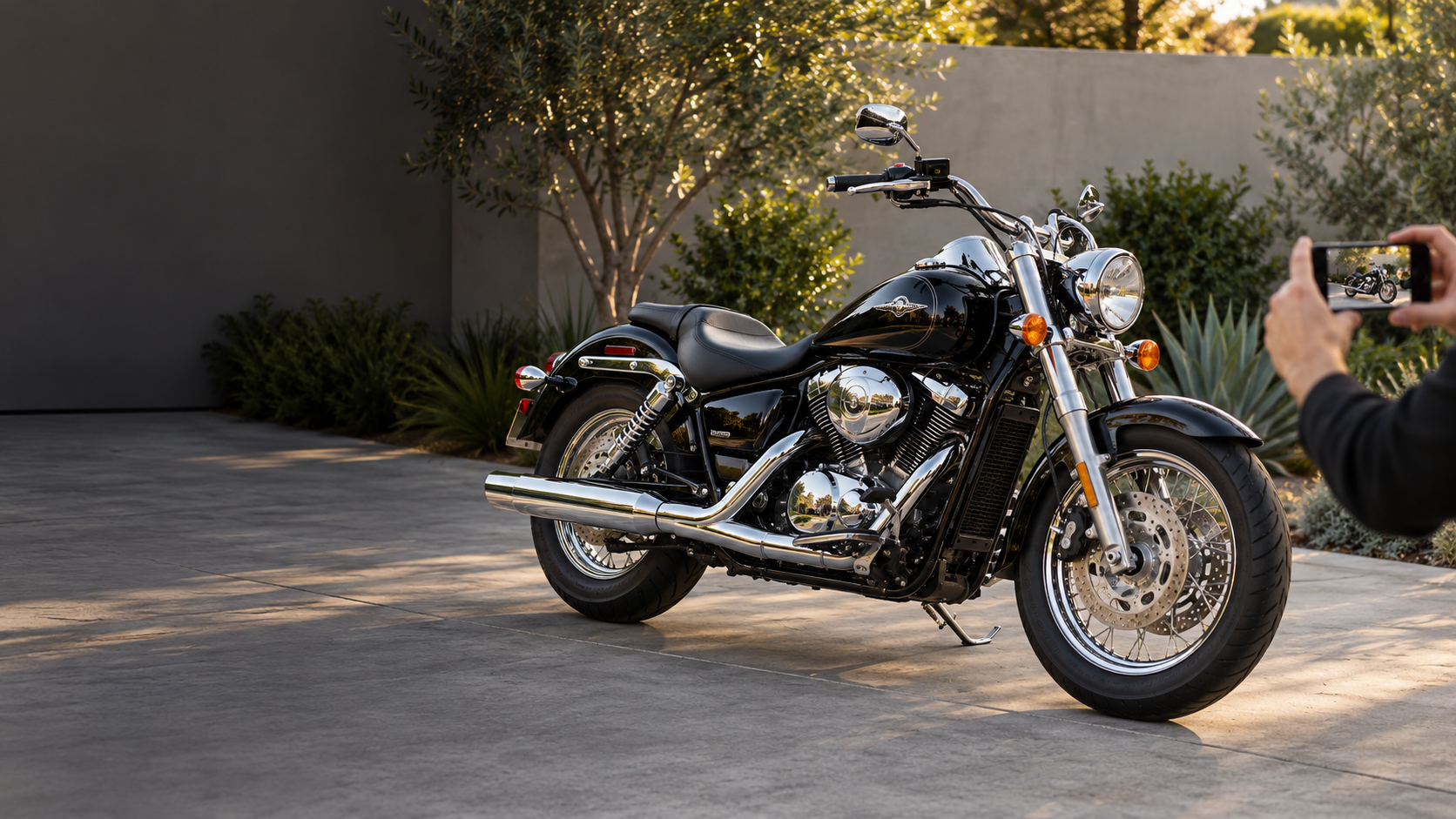
When you prepare your motorcycle for sale, presentation matters. A clean bike, complete maintenance records, clear photos, and an honest description can attract serious buyers and help support your asking price.
Use this guide to get your motorcycle ready before you create the listing or meet with potential buyers.
1. Gather Your Paperwork
Start by collecting the documents and information a buyer may want to review:
- Motorcycle title
- Current registration
- Maintenance and repair records
- Receipts for parts and upgrades
- Owner’s manual
- Spare keys
- Loan payoff information, if applicable
- Original parts removed during modifications
Confirm that the name and vehicle identification number on the title match the motorcycle. If a lender still holds an interest in the bike, contact the lender before listing it so you understand the payoff and title-release process.
California sellers must submit a Notice of Transfer and Release of Liability to the DMV within five calendar days after the sale. Motorcycles do not require a California smog inspection.
2. Review the Motorcycle’s Condition
Inspect the motorcycle before deciding what to repair. Check the areas a careful buyer will probably examine:
- Tires and tread
- Brake pads and rotors
- Fluid levels
- Chain or belt condition
- Lights and signals
- Battery
- Controls and switches
- Mirrors
- Leaks
- Scratches, dents, rust, and corrosion
Follow the maintenance instructions in your owner’s manual. Consider having a qualified motorcycle technician inspect mechanical or safety-related concerns.
Avoid spending heavily on modifications or cosmetic repairs that may not increase the selling price. Basic maintenance and obvious safety items usually deserve attention first.
3. Clean the Motorcycle Thoroughly
A clean motorcycle photographs better and shows buyers that you cared for it. Allow the engine and exhaust to cool before cleaning.
Remove dirt and buildup from:
- Painted panels
- Windshield and plastics
- Wheels and spokes
- Chrome and polished metal
- Engine surfaces
- Exhaust
- Frame
- Underside
- Seat and saddlebags
Use products approved for each surface. Keep wax, polish, and tire dressing away from brake components, tire tread, grips, and foot controls.
Cycle Trader recommends cleaning the frame, wheels, chain, undercarriage, paint, and chrome before selling. It also suggests professional detailing when your time or cleaning setup is limited.
4. Address Bugs, Road Grime, and Stains
Soften dried bug residue with a damp microfiber towel or motorcycle-safe bug remover. Don’t scrape it from the paint or windshield.
Tar, grease, brake dust, and heavy road film may need separate cleaners. Test each product on a hidden area and follow the label directions. Don’t use abrasive pads or strong household cleaners.
If stains or buildup remain after gentle cleaning, professional motorcycle detailing may be safer than repeated scrubbing.
5. Improve the Finish
After cleaning and drying the bike, inspect the paint under good lighting. Light swirl marks, oxidation, water spots, and faded trim can make an otherwise well-maintained motorcycle look neglected.
Depending on the finish, preparation may include:
- Paint polishing
- Chrome polishing
- Wax or paint sealant
- Plastic and trim treatment
- Leather cleaning and conditioning
- Rust or oxidation treatment
Some scratches and finish defects cannot be corrected through detailing. Don’t try to hide damage. Photograph and describe it accurately.
6. Remove Personal Items
Take off anything that doesn’t come with the motorcycle, including:
- Phone mounts
- Toll transponders
- Garage remotes
- Registration or insurance papers
- Personal storage items
- Decorative items you plan to keep
Decide which accessories are included in the sale. List extras such as saddlebags, a passenger seat, a motorcycle cover, factory parts, or a battery charger.
7. Take Clear Listing Photos
Photograph the motorcycle after it has been cleaned. Use a simple background and soft daylight. Avoid dark garages, cluttered driveways, heavy filters, and stock photos.
Include photos of:
- Left and right sides
- Front and rear
- Fuel tank and paint
- Engine
- Wheels and tires
- Seat
- Instrument panel and mileage
- Exhaust
- Accessories
- VIN label when sharing it is appropriate
- Existing scratches or damage
Show the motorcycle honestly. Clear photos of imperfections can reduce wasted appointments and build buyer confidence. Cycle Trader recommends authentic photos and cleaning the motorcycle before taking listing photos or videos.
8. Research a Realistic Asking Price
Compare motorcycles with the same:
- Year
- Make and model
- Mileage
- Condition
- Trim level
- Accessories
- Location
Use several sources rather than relying on one valuation. Asking prices do not always reflect final selling prices.
Kelley Blue Book notes that motorcycle values generally assume a clean, standard motorcycle. The buyer and seller must account for the bike’s actual condition when agreeing on a price.
Leave a reasonable amount of room for negotiation, but avoid setting the price so high that buyers skip the listing.
9. Write an Honest Description
Your listing should answer the questions buyers commonly ask. Include:
- Year, make, and model
- Mileage
- Ownership history
- Maintenance history
- Recent repairs
- Tire condition
- Modifications
- Included accessories
- Known cosmetic or mechanical issues
- Title and registration status
- Reason for selling
- Preferred payment and contact method
Don’t claim that the motorcycle is perfect unless you can support that statement. A clear description saves time and helps you deal with better-informed buyers.
10. Prepare for Buyer Meetings
Meet in a safe, visible place when possible. Keep the title and personal documents secure until you have agreed on the sale and verified payment.
Before allowing a test ride, confirm the rider has:
- A valid motorcycle license
- Proper riding gear
- Your permission to operate the motorcycle
- An agreed form of security or payment protection
Check your insurance coverage before permitting anyone to ride your motorcycle. You can also meet at a motorcycle dealership or qualified shop for a buyer-requested inspection.
Motorcycle Sale Preparation Checklist
Before publishing your listing, confirm that you have:
- Cleaned and dried the motorcycle
- Checked basic maintenance items
- Gathered service records
- Located the title and spare keys
- Removed personal belongings
- Listed included parts and accessories
- Photographed the bike from several angles
- Documented visible damage
- Researched comparable motorcycles
- Written an accurate description
- Planned a safe meeting and payment process
Get Your Motorcycle Ready to Sell
A professional detail can give buyers a cleaner and more complete view of your motorcycle’s condition. Keep It Klean provides mobile motorcycle detailing throughout Los Angeles, including hand washing, wheel cleaning, chrome care, paint polishing, leather treatment, and finish protection.
We come to your home or workplace, so you can prepare your motorcycle for photos and buyer appointments without transporting it to a detailing shop.
Call 310-412-2277 or request a motorcycle detailing quote.