MOBILE MOTORCYCLE DETAILING IN LOS ANGELES
How to Clean Your Motorcycle After Riding in the Rain
Remove dirty road film, prevent water spots, and protect your motorcycle’s paint, chrome, wheels, and exposed metal after a wet ride.
Browse Motorcycle Care Guides
How to Clean Your Motorcycle After Riding in the Rain
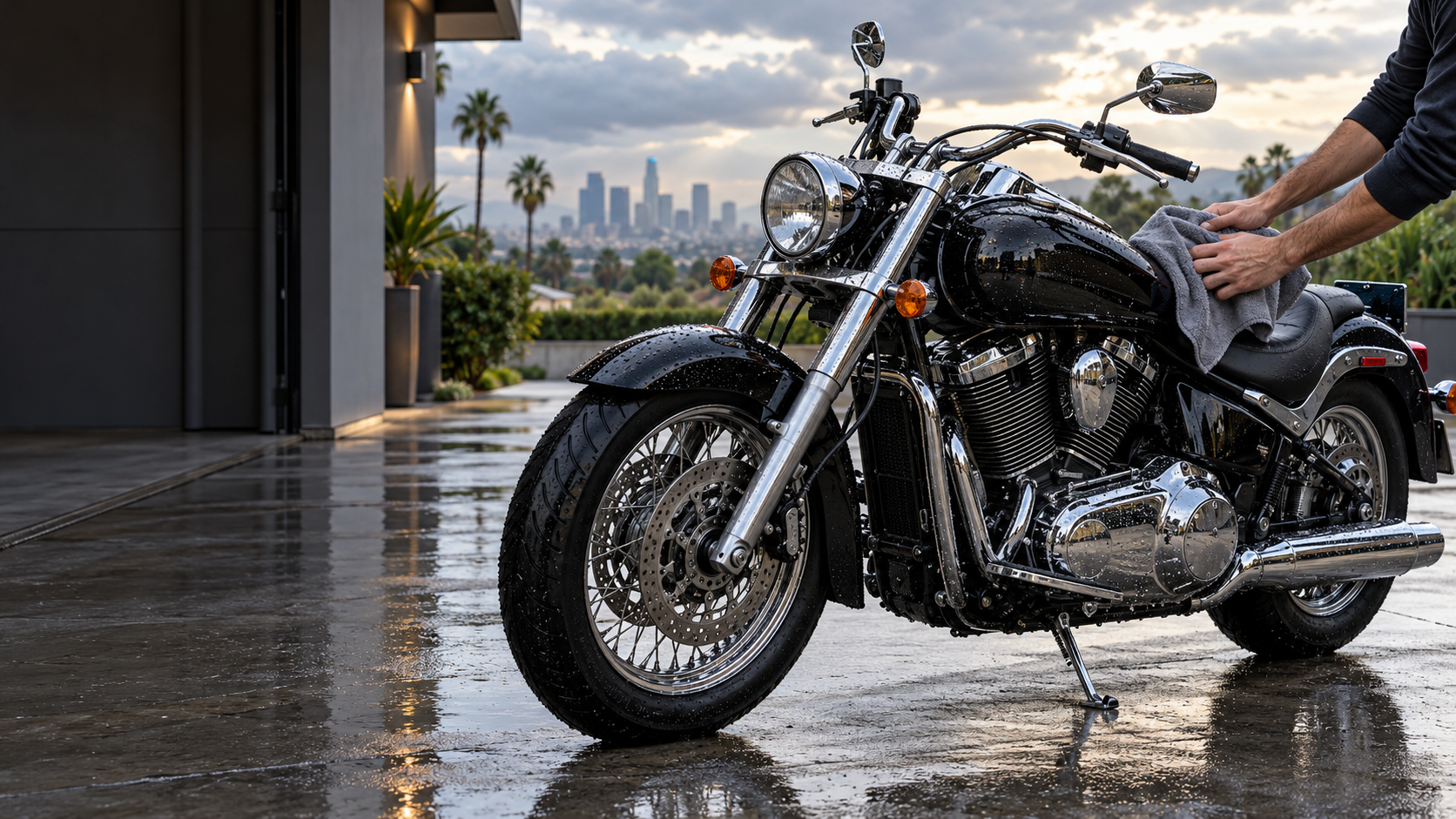
When you clean your motorcycle after riding in the rain, you remove more than water. Wet roads can coat your bike with dirt, brake dust, oil residue, and other contaminants that may leave water spots or contribute to corrosion.
A quick rinse and careful drying may be enough after light rain. A longer ride on dirty roads may require a complete motorcycle wash.
Why You Should Clean Your Motorcycle After Rain
Rainwater combines with dirt and residue already on the road. As the water dries, it can leave a film on paint, chrome, wheels, engine parts, and the underside of the bike.
Cleaning the motorcycle soon after a wet ride can help:
- Remove dirty road film
- Reduce water spots
- Clear debris from wheels and brakes
- Protect chrome and exposed metal
- Prevent grime from drying into tight spaces
- Make leaks or damage easier to see
- Keep the motorcycle ready for your next ride
Harley-Davidson advises riders to clean and protect motorcycle surfaces regularly to help limit rust and corrosion. Its guidance also warns that rubbing gravel, dirt, or grime across a surface can cause scratches.
What You’ll Need
Gather the following supplies:
- Motorcycle-safe wash soap
- Two buckets, if available
- Soft wash mitt
- Soft detailing brushes
- Separate wheel brush
- Clean microfiber towels
- Motorcycle-safe drying equipment
- Surface-appropriate wax, sealant, or protectant
- Chain cleaner and lubricant for chain-driven motorcycles, if required
Check your owner’s manual before washing or lubricating your motorcycle. Models and finishes can have different care instructions.
Step 1: Let the Motorcycle Cool
Park the motorcycle in a shaded, ventilated area. Allow the engine, brakes, and exhaust to cool before washing.
Applying cool water to hot metal can cause spotting and may affect some surfaces. Cleaning products can also dry too quickly on a hot motorcycle.
Step 2: Inspect the Bike Before Washing
Look over the motorcycle before rinsing it. Check for:
- Heavy mud or road film
- Leaves and debris
- Water around electrical areas
- Oil or fluid leaks
- Tire damage
- Loose parts
- Scratches or chips
- Debris near the brakes
- Water inside saddlebags or storage compartments
Don’t begin detailing if you notice a mechanical problem that needs immediate attention.
Step 3: Rinse Off Loose Dirt
Use cool or warm water at low pressure to loosen surface dirt. Rinsing first reduces the chance of dragging abrasive particles across the paint.
Avoid directing water at:
- Air intakes
- Exhaust openings
- Electrical connectors
- Bearings
- Seals
- Switches
- Speakers
- Luggage seams
Indian Motorcycle warns that pressurized water can enter bearings, brake components, electrical connectors, suspension parts, and seals. Its current washing guidance recommends low-pressure water and extra care around air intakes and exhaust openings.
Step 4: Clean the Wheels and Lower Areas
Wheels, fenders, suspension parts, and the underside usually collect the most road grime during a wet ride.
Use a wheel cleaner approved for your motorcycle’s wheel finish. Agitate the dirt with a soft wheel brush, then rinse thoroughly.
Keep wheel-cleaning tools separate from the wash mitt used on paint. Brake dust and road grit caught in a towel or brush can scratch painted and polished surfaces.
Avoid getting tire dressing, wax, oil, or polish on:
- Tire tread
- Brake discs
- Brake pads
- Foot controls
- Hand grips
Step 5: Wash From the Top Down
Add motorcycle-safe soap to a clean bucket according to the product instructions. Wash the motorcycle gently from the cleaner upper sections toward the dirtier lower sections.
Pay attention to:
- Fuel tank
- Painted panels
- Windshield
- Headlight
- Forks
- Engine surfaces
- Frame
- Chrome
- Exhaust
- Rear fender
- License plate area
Rinse the mitt often. Don’t scrub hardened dirt. Soften it with water or a surface-approved cleaner first.
Indian Motorcycle recommends non-abrasive, neutral-pH soap, soft cleaning materials, and warm or cool water. It also advises against dry wiping, stiff brushes, solvents, and washing hot surfaces in direct sun.
Step 6: Rinse Thoroughly
Rinse away all soap and loosened dirt using gentle water pressure. Check seams, engine fins, spokes, trim edges, and mounting points where soap can collect.
If your motorcycle encountered road salt, check the owner’s manual before washing. BMW specifically recommends cold water for removing road salt because warm water can increase its corrosive effect.
Step 7: Dry the Motorcycle Completely
Dry the motorcycle from the top down with clean microfiber towels. Use fresh towels as they become wet or dirty.
Pay close attention to:
- Chrome and polished metal
- Wheel spokes
- Engine fins
- Fasteners
- Exhaust joints
- Fork tubes
- Areas under the seat
- Saddlebags and luggage
- Switch housings
- Crevices around trim
A motorcycle dryer that provides clean, filtered air can help remove water from tight spaces. Avoid unfiltered compressed air that may spray oil or debris onto the motorcycle.
Don’t cover or store the bike while it is still wet.
Step 8: Check the Chain or Final Drive
If your motorcycle uses a chain, rain and washing may remove lubricant or leave contamination behind. Check the chain after the bike is dry.
Clean, inspect, and lubricate it according to the motorcycle and chain manufacturers’ instructions. Don’t spray lubricant onto the tire or brake components.
For belt-drive and shaft-drive motorcycles, follow the inspection and care instructions in the owner’s manual.
Step 9: Protect the Finish
Once the motorcycle is clean and dry, inspect the paint, chrome, metal, plastics, and leather.
Apply a compatible protectant where needed:
- Wax or sealant for gloss paint
- Approved cleaner for matte or denim finishes
- Chrome or metal protectant
- Bare-aluminum protection
- Plastic and trim protectant
- Leather conditioner
Don’t apply gloss products to matte paint unless the motorcycle manufacturer approves them.
Harley-Davidson recommends polishing and sealing suitable wheel finishes to help resist corrosion. Some bare aluminum surfaces require their own protectant rather than a general metal polish.
Step 10: Check the Brakes Before Riding
Rain and washing can leave brake discs and pads wet. Braking performance may feel reduced until the components dry.
Before returning to normal traffic:
- Check that the brakes respond correctly.
- Begin at low speed in a safe area.
- Apply the brakes gently.
- Allow extra stopping distance until braking returns to normal.
BMW warns that brake discs and pads may remain damp after washing, riding through water, or riding in rain. Indian Motorcycle also instructs riders to check brake operation after washing.
Can You Let a Rain-Soaked Motorcycle Air-Dry?
Air-drying alone can leave water spots and trapped moisture. Water may remain around fasteners, spokes, engine fins, and trim after visible surfaces appear dry.
At minimum, rinse away dirty road film and dry the motorcycle with clean microfiber towels. Pay extra attention to chrome and exposed metal.
Common Post-Rain Cleaning Mistakes
Avoid these mistakes:
- Wiping a dirty motorcycle without rinsing it
- Washing hot engine or exhaust parts
- Using a pressure washer near seals or electrical parts
- Using household detergent
- Cleaning wheels with the same towel used on paint
- Leaving water in crevices
- Covering the motorcycle while it is wet
- Applying slick products near brakes or tire tread
- Forgetting to inspect and lubricate the chain
- Riding normally before checking wet brakes
Mobile Motorcycle Cleaning After a Wet Ride
Cleaning road film from a motorcycle takes time because water and dirt collect around the wheels, engine, frame, exhaust, and other tight spaces.
Keep It Klean provides mobile motorcycle detailing at homes and workplaces throughout Los Angeles. Our services may include:
- Hand washing with de-ionized water
- Wheel and spoke cleaning
- Chrome and metal care
- Engine and exhaust cleaning
- Paint protection
- Leather treatment
- Drying of hard-to-reach areas
Get the Rain and Road Grime Off Your Bike
Don’t let dirty rainwater dry across your motorcycle’s paint, chrome, wheels, and exposed metal. Keep It Klean will come to your home or workplace and clean your bike with products and methods selected for its surfaces.
Call 310-412-2277 or request a mobile motorcycle detailing quote.